Punta Cana Dolphin Encounter Tours: Swim, Interaction And Marine Wildlife Options Compared
Dolphin encounters are one of the most requested marine experiences in Punta Cana, and the differences between formats matter more than most visitors expect. This guide compares the swim and interaction programs, the shark and stingray reef alternative, and the winter whale-watching season in Samana, with verified prices and ratings for each option.
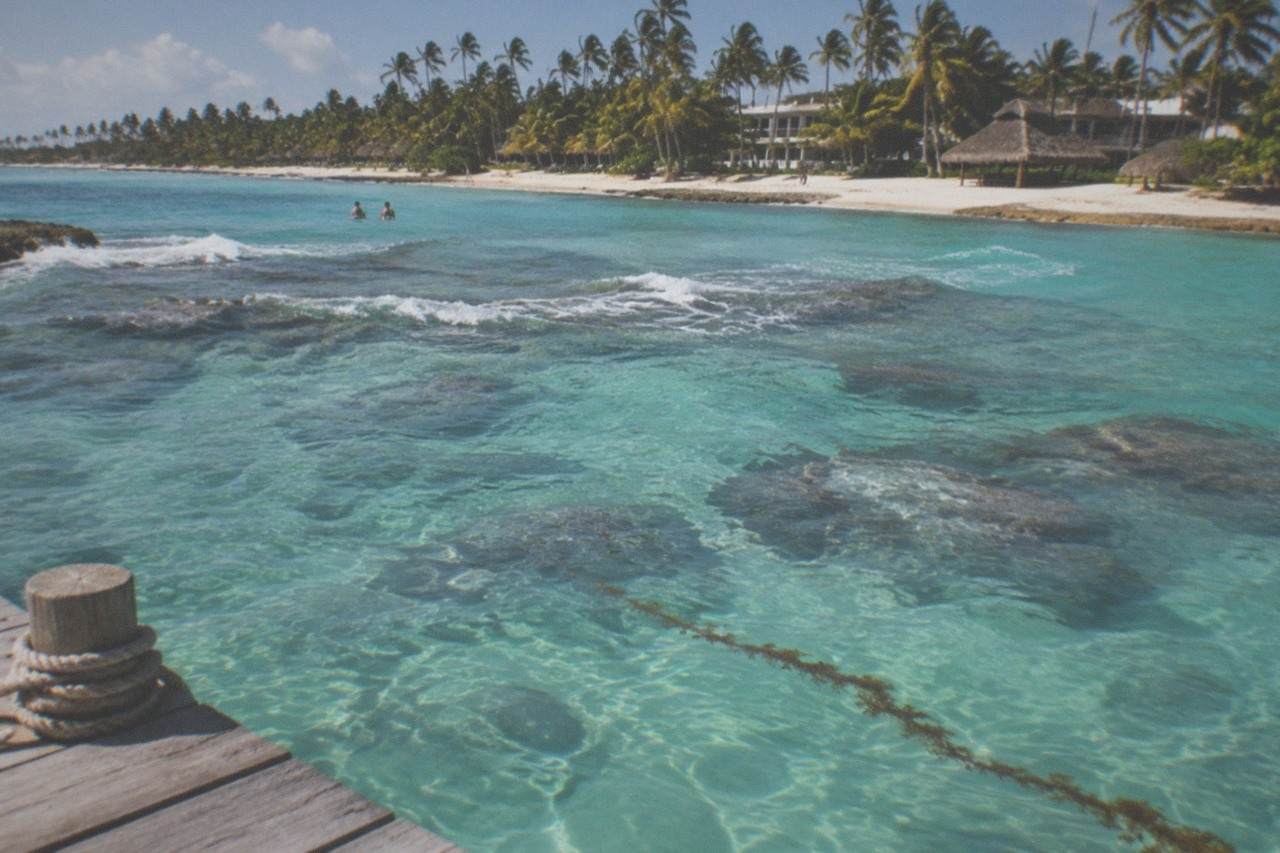
Short answer
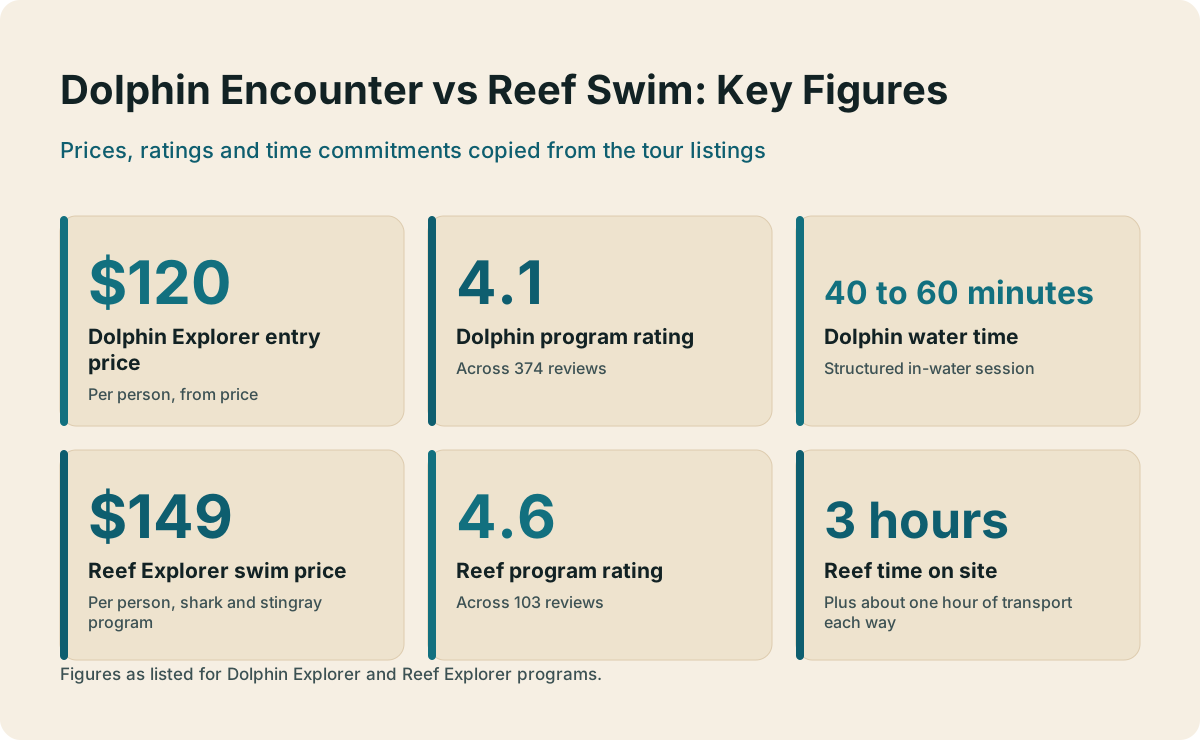
The Dolphin Explorer swims and interactions program in Punta Cana runs from $120 per person and is rated 4.1 across 374 reviews, with roughly 40 to 60 minutes of water time. A reef-based shark and stingray swim runs from $149, rated 4.6 from 103 reviews. Whale watching near Samana runs January to March only, from $65.
Dolphin programs in Punta Cana are sold in sharply different formats, and the gap between them is not just price. A "swim" program puts you in deep water with a dolphin for towed rides and free interaction, while an "interaction" or "encounter" program keeps you on a submerged platform where the animal comes to you. Choosing the wrong one is the single most common reason a family leaves disappointed, because expectations built on YouTube videos rarely match the shallow-water reality of the cheaper tiers.
This guide lays out what each format actually includes, what the verified prices and ratings look like across the local roster, and where the alternatives sit. Some visitors arrive wanting dolphins and leave having booked a reef shark and stingray swim instead, because it costs more per minute of water time but delivers a full afternoon of varied marine life. Others time their trip to January through March and add whale watching off the Samana peninsula. All three paths are compared below with the numbers that matter.
What Does A Punta Cana Dolphin Encounter Tour Actually Include?
A standard dolphin encounter in Punta Cana includes roughly 40 to 60 minutes of structured water time, a professional handler and trainer briefing, life vest use, and usually round-trip hotel transport, with the Dolphin Explorer swims and interactions program priced from $120 per person and rated 4.1 across 374 reviews. Photo packages and professional souvenirs are almost always sold separately.
The water time is the number to scrutinize. The Dolphin Explorer listing describes 40 to 60 minutes in the water plus venue time, which means a family of four should budget close to two hours at the facility once briefings, vest fitting, and photo viewing are counted. That is still a half-day-plus activity by the time hotel pickup each way is added, not a quick stop between lunch and the beach.
What the fee covers also varies by tier. The swim tiers generally include the towed behaviors, where a dolphin pulls you across the lagoon by the dorsal fin, plus free-interaction segments where you touch and signal the animal under a trainer's eye. The lower interaction tiers keep you on a platform in waist-deep water and focus on touching, feeding, and a handshake or kiss behavior. Both include the briefing, which covers hand placement, how to avoid startling the animal, and the simple hand signals used during the session.
Photos are the predictable upsell. Nearly every marine park in the region runs a separate photo operation, and prices for a single printed image or a digital package are set on site, not on the tour listing. If photos are the point of the trip for you, check the venue's photo pricing policy with the operator when you book, and factor it into the total budget rather than being surprised at the counter.
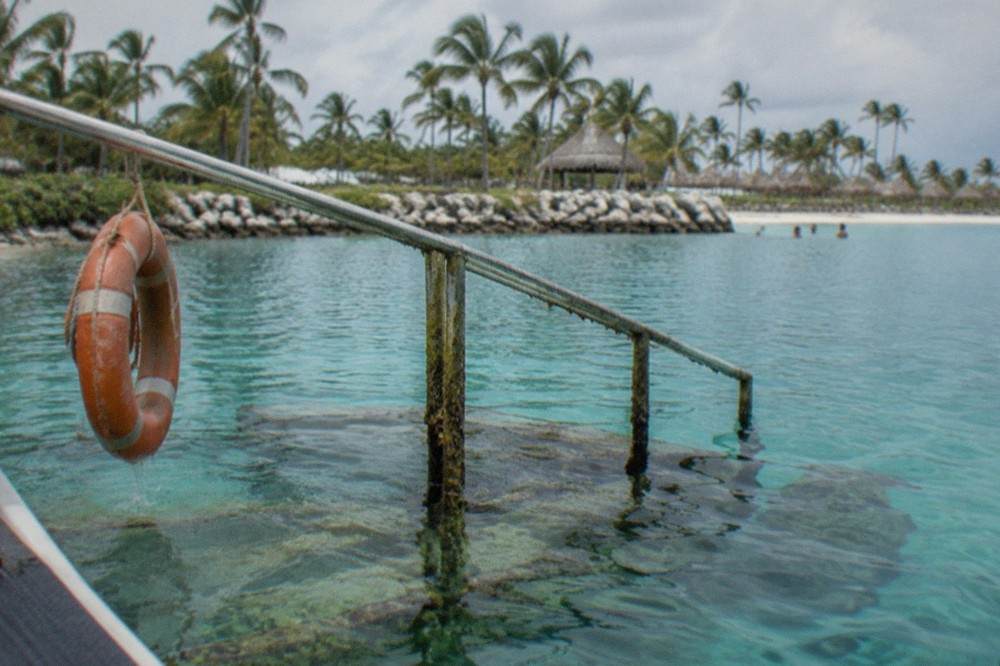
Swim Or Interaction: Which Dolphin Program Format Fits You?
Swim programs put participants in deep water with towed dolphin rides and free interaction and suit confident swimmers from around eight years up, while interaction programs use a waist-deep platform, cost less, and suit younger children and nervous adults. The Punta Cana roster's swim tiers start from $120 per person. Non-swimmers and pregnant visitors are typically excluded from deep-water tiers.
The deep-water swim is the flagship product, and it is the one that matches most people's mental image. You enter a lagoon without a floor underfoot, the dolphin approaches on command, and the session includes the foot-push or dorsal-tow behaviors that dominate the promotional videos. The Dolphin Explorer swims and interactions tour, rated 4.1 across 374 reviews, covers this tier, and the listing confirms roughly 40 to 60 minutes of water time depending on the package selected. Confident swimming is expected, a vest is worn throughout, and trainers stay within arm's reach the entire session.
The platform interaction is a genuinely different product, not a lesser version of the same thing. You stand on a submerged platform at roughly waist depth, and the dolphins come to you. Behaviors include touching, a kiss, a handshake, and often a supervised feeding segment. For families with a child under the deep-water age minimum, or for a grandparent who wants the memory without the deep-water demands, this is the format that works, and it is priced below the swim tiers on the live listing.
Age and health gates are enforced on site, not on paper. Deep-water swim tiers typically require a minimum age in the eight-to-ten range, and the interaction tiers admit younger children accompanied by an adult. Pregnancy is a standard exclusion across all in-water dolphin programs in the region, as are certain back and cardiac conditions. The exact age minimums and exclusions are listed per package on the operator's live listing, and they are worth checking before promising a session to an eager seven-year-old.
| Format | Water depth | Signature behaviors | Best suited for | Typical exclusions |
|---|---|---|---|---|
| Deep-water swim | Over head height | Dorsal tow, foot push, free interaction | Confident swimmers, adults, older children | Non-swimmers, pregnancy, young children |
| Platform interaction | Waist deep | Touch, kiss, handshake, supervised feeding | Young children, nervous adults, mixed families | Fewer, but medical conditions still apply |
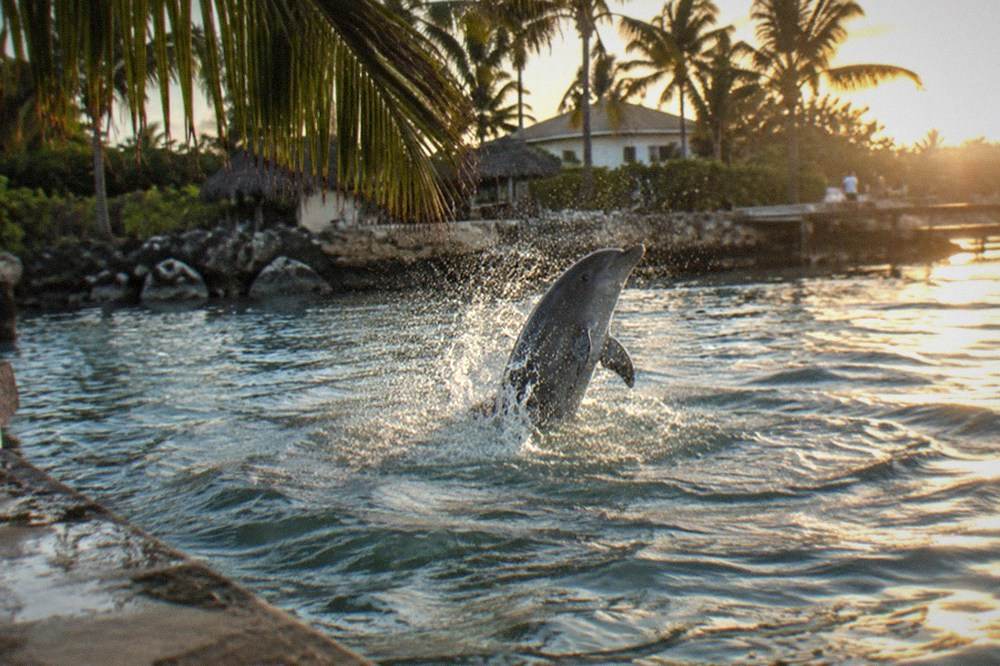
For a decision this personal, the format matters more than the price difference. The three marine-wildlife options below cover the dolphin swim, the reef alternative, and the winter whale season in one comparison.
The Dolphin Explorer program is the anchor pick for the classic dolphin experience, with the reef shark and stingray swim as the same-family alternative and the Samana whale trip as the seasonal contrast. Between them they cover nearly every version of "I want marine animals on this trip."
How Much Does A Dolphin Tour In Punta Cana Cost?
The Dolphin Explorer swims and interactions program starts at $120 per person on the live listing, with the total cost driven by the tier chosen: platform interaction packages sit at the low end and deep-water swim tiers cost more, while photos, souvenirs, and sometimes transport are sold separately. Children's rates are shown per package on the listing.
Price transparency in this category is uneven. Some marine parks publish a clean tier ladder, others quote a headline number and reveal the swim-tier surcharge at checkout. The Punta Cana roster's dolphin program is firmly priced from $120, which places it in the same bracket as the region's full-day premium excursions, a notable fact given the water time is measured in minutes rather than hours. That per-minute cost is the honest way to compare a dolphin swim against, say, a full-day catamaran excursion.
The budget math depends on what the family wants from the day. A single adult doing a deep-water swim pays from $120 for under an hour of water time. A family of four choosing platform interactions pays four lower-tier fares for a shorter, calmer session. A family that splits, two swimmers and two platform participants, gets the full experience at a blended cost, and this mixed approach is common enough that most venues accommodate it within a single booking slot.
Add-ons are where the total climbs. Photo packages, video packages, lockers, towels, and food at the venue are typically extra, and the venue's dining options are priced on site. Round-trip hotel transport is included in some tiers and sold as an option in others, so the checkout page is the place to confirm it. The figure to hold in mind is that the advertised "from $120" is the floor of the experience, not the ceiling of the day.
| Cost component | Typical range | Notes |
|---|---|---|
| Platform interaction tier | From $120 per person as the roster entry point | Exact per-tier figures shown on the live listing |
| Deep-water swim tier | Above the entry tier, quoted per package | Includes towed behaviors and free interaction |
| Photo or video package | Priced on site at the venue | Rarely included in any tier |
| Hotel transport | Round-trip hotel pickup included | Confirm at checkout |
| Venue extras (lockers, food) | Priced on site | Budget separately |
Is The Shark And Stingray Reef Swim A Better Choice Than Dolphins?
The Reef Explorer shark and stingray swim runs from $149 per person, rated 4.6 across 103 reviews, with about one hour of transport each way plus roughly three hours on site. It is the stronger value per hour on the water than a dolphin program, but it replaces the close mammal interaction with a broader, free-swimming reef experience featuring nurse sharks and stingrays.
The comparison is honest rather than rhetorical. The reef program's rating, 4.6 from 103 reviews, sits above the dolphin program's 4.1 from 374 reviews, and its structure delivers far more total time with animals: three hours on site against 40 to 60 minutes of water time. Guests move between a stingray touch area, a shallow lagoon where nurse sharks swim freely, and snorkeling segments, and the format allows family members to participate at different intensity levels in the same visit.
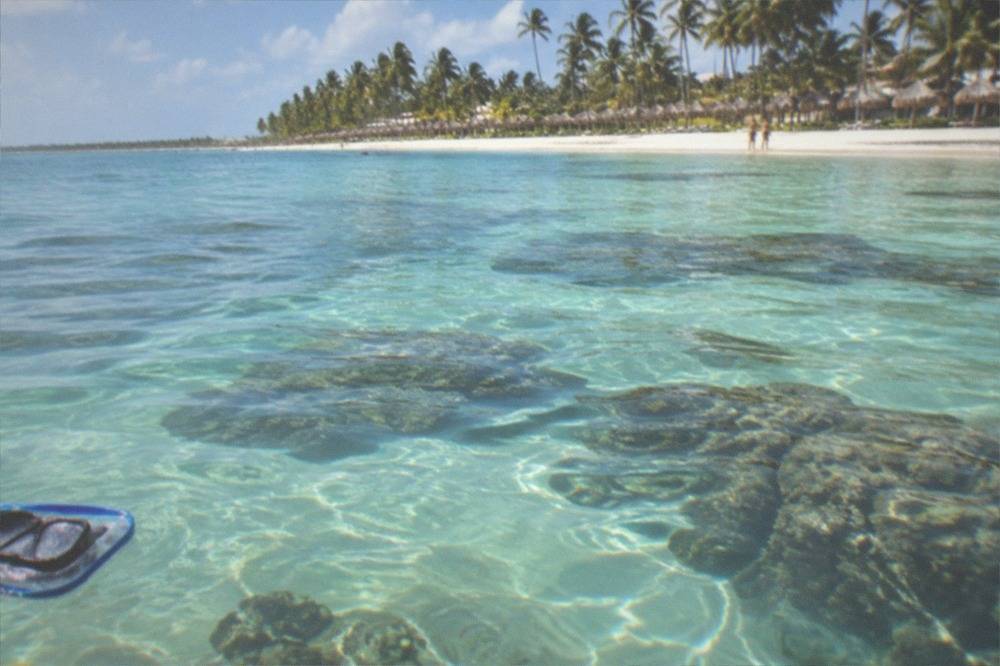
The animals are the other half of the difference. Nurse sharks and stingrays are elasmobranchs, not mammals, and the interaction style reflects that: no towed rides, no hand signals, no trained behaviors in the show sense. What you get instead is genuine proximity to large animals in open water, which many visitors describe as more memorable precisely because it is less scripted. One recent review on the live listing calls the stingray lagoon the highlight of a full Punta Cana week.
Practical constraints favor the reef option for mixed groups. There is no deep-water swimming requirement comparable to the dolphin swim tiers, non-swimmers can stay in the touch areas, and the three-hour on-site window means the experience does not hinge on a single 50-minute performance. The trade is simple: dolphins deliver a closer, choreographed interaction with a highly trained animal, while the reef delivers more time, more species, and a higher rating at a higher entry price.
For families still torn between the two, a useful tiebreaker is who the day is for. If the answer is one specific child who has talked about dolphins for months, the reef swim will not substitute, and the dolphin program is the right call. If the answer is the whole family wanting a shared water day with plenty to look at, the reef program's longer format and broader animal roster wins on almost every practical measure, and the higher rating pool reflects that consistency.
Can You Combine Dolphins With Snorkeling On The Same Day?
Yes, and the practical way is to book the dolphin session in a morning slot and a short catamaran snorkeling cruise in the afternoon or the following day. The Punta Cana roster includes a small-group cruising and snorkeling catamaran at 3.5 hours from $59.99, rated 4.9 across 2,650 reviews, and an adults-only coral reef snorkeling experience at 4 hours from $114, rated 4.9 from 1,805 reviews.
Timing is the constraint. Dolphin programs occupy roughly half a day with transport, and Saona Island style full-day excursions occupy the whole day, so the clean combinations pair a dolphin morning with a short afternoon cruise, or stack them on consecutive days. The small-group catamaran is the natural pairing for families: 3.5 hours on the water, snorkeling stops, and a 4.9 rating from a genuinely large review pool of 2,650, which makes it one of the best-supported products in the entire Punta Cana roster.
The adults-only coral reef option serves a different pairing. At 4 hours and from $114, it suits couples whose trip plan already includes a dolphin or reef session and who want a quieter second experience without the party-boat energy. Its 4.9 rating from 1,805 reviews signals the same consistency, and the adults-only format removes the schedule friction that comes with coordinating children's nap windows around two activities in one day.
For the full snorkeling picture beyond these two, the deeper comparison of operators, reef sites, and pricing lives in the Punta Cana snorkeling tours guide. The short version: marine-life density is highest at the reef sites reachable by boat, not from the beach, so any snorkeling add-on that puts you on a vessel is worth the extra cost over shoreline swimming.
When Can You Watch Whales Instead Near Punta Cana?
Humpback whale watching near Samana runs January to March only, on a roughly 8.5-hour day trip combining the whale observation boat with a Cayo Levantado (Bacardi Island) stop, priced from $65 per person and rated 4.0 across 17 reviews. Outside that window the tour does not operate, so it is a seasonal decision that has to be planned around, not booked on arrival.
The Samana season is the Caribbean's most accessible whale migration. North Atlantic humpbacks calve and breed in the shallow banks off the Dominican Republic's northeast coast each winter, and the observation boats operate under regional whale-watching regulations that limit approach distance and time. The trip from Punta Cana is a commitment: 8.5 hours total, with the whale-watching segment and then a stop at Cayo Levantado, the island marketed as Bacardi Island, which gives the day a beach component alongside the wildlife.
The rating deserves honest handling. A 4.0 from 17 reviews is a small pool, and a whale sighting, while overwhelmingly likely in peak season, is never guaranteed on any specific departure. The price, from $65, is strikingly low for an 8.5-hour day with two components, which reflects the long overland transfer from Punta Cana to the Samana departure point being handled at scale. Reviews on the live listing note the transfer length as the main friction point, with the whale segment itself described as the payoff.
The seasonal window is the planning fact. If your trip falls between January and March, whale watching is the only marine-wildlife option in the region featuring wild, free-ranging animals rather than resident program animals, and that distinction matters to a meaningful share of visitors. Outside those months, the realistic choice set is the dolphin program, the reef swim, and the snorkeling cruises, and the whale tour should simply be off your list rather than searched for in hope.
The Dominican Republic's protected-area framework governs more than the whale corridor. The marine zones around Saona fall under the national park system managed by the environment ministry, whose protected areas overview covers the regulations that tour operators operate under in those waters.
How Do Dolphin Venues Handle Animal Welfare And Ethics?
Dolphin venues in the Dominican Republic operate under national animal-welfare regulations and require licensed facilities, and the honest way to evaluate a program is to check the operator's welfare statements, trainer qualifications, and enclosure size on the live listing before booking. There is no independent certification body for dolphin programs in the region comparable to zoo accreditation elsewhere.
This is a question visitors increasingly ask, and it deserves a straight answer rather than marketing copy. Resident dolphin programs are inherently controversial: animals are held in lagoons, trained for interactive behaviors, and bred in captivity. Visitors who are uncomfortable with that model will not be talked into it by a welfare page, and the genuine alternatives in the region are the reef swim and the seasonal whale watching, both of which feature animals in their own environment.
For visitors who proceed, the differences between facilities are real. Better-run venues publish their trainer certification, their lagoon dimensions, their veterinary arrangements, and their session caps, meaning how many guests share the water with each animal. Weaker venues publish none of this. Asking the venue directly about session caps and rest periods for the animals is a reasonable pre-booking step, and a facility that cannot answer those questions plainly is telling you something.
A middle path exists. Some visitors split their itinerary deliberately: a dolphin interaction for a child who has dreamed of it, and a reef or whale experience as the wild counterpart, using the trip to show both versions of marine wildlife. That framing sits well with families, and the Punta Cana roster supports it cleanly, since the reef program and the dolphin venue sit at similar price points and can be booked for consecutive days.
What Should You Bring And How Should You Prepare?
Bring swimwear worn under clothes, a towel, reef-safe sunscreen applied only after the session or not at all in the lagoon, secure footwear for wet surfaces, and cash or a card for photos. Arrive fed, since sessions run on fixed schedules, and confirm your pickup time and the venue's photo policy the day before.
Preparation is short but specific. Swimwear must be worn under street clothes or changed on site, which cuts into water time if the whole family changes at the venue. Towels are sometimes provided and sometimes sold, so carrying your own removes the doubt. Sunscreen is the sensitive item: many marine venues restrict or ban standard sunscreen in animal lagoons because the chemicals affect the water, so check the listing policy and rely on rash coverage rather than lotion for the session window.
Footwear matters more than most visitors expect. Lagoon steps and platforms are wet concrete, and the walk between briefing areas, changing rooms, and the water is on uneven ground. Water shoes with grip solve this entirely. For the reef program, the same shoes serve the wading segments, and mask-fit is worth testing at home, since a leaking mask is the most common reason a first snorkeling experience goes badly.
The paperwork side is administrative but real. Visitors entering the Dominican Republic by air must complete the free digital e-ticket entry form before arrival, with the details explained on the official migration authority's e-ticket page. Booking confirmations, ID for each participant, and the age documentation for children on tier-restricted packages should all travel in the same phone wallet as the e-ticket QR code. The Dominican Republic entry requirements guide covers the passport-validity exception currently in effect for US visitors through the end of 2026.
| Item | Dolphin program | Reef shark and stingray swim | Samana whale trip |
|---|---|---|---|
| Water time | About 40 to 60 minutes | About 3 hours on site | On-boat observation |
| Deep swimming needed | For swim tiers only | No, wading areas available | No, boat-based |
| From price | $120 | $149 | $65 |
| Rating | 4.1 from 374 reviews | 4.6 from 103 reviews | 4.0 from 17 reviews |
| Season | Year-round | Year-round | January to March only |
| Best for | Close mammal interaction | More time, more species | Wild animals, winter trips |
How Does A Dolphin Tour Compare On Value Against Other Punta Cana Excursions?
Against the broader excursion market, a dolphin encounter is a premium per-hour purchase: from $120 for under an hour of water time, versus a full-day Saona Island trip from $82, a 3.5-hour small-group catamaran from $59.99, and a half-day zipline, dune buggy and horseback combination from $100. It wins on emotional intensity, not on time or cost efficiency.
The honest framing is that nobody books a dolphin swim for value. They book it because a specific person, usually a child, wants a specific memory, and no other excursion in the region produces that particular one. Measured any other way, the full-day marine options dominate: the Saona Island catamaran tours run 9 to 10 hours including transfers for $82, with buffet lunch and open bar included, and the small-group Saona option at $165 carries a 5.0 rating from 1,544 reviews, one of the strongest signals in the entire local market. The broader comparison of the best Punta Cana excursions shows how wide the field is, and a full planning resource for that side of the decision is Tours in Punta Cana, the parent guide covering every excursion category in one place.
The value question turns on group composition. For a couple choosing one signature marine day, the reef swim or an adults-only snorkeling cruise delivers more hours and higher ratings for similar money. For a family with a dolphin-obsessed child, the calculation is not arithmetic at all, and $120 is a fair price for a memory that will outlast any catamaran afternoon. The mistake to avoid is booking both a dolphin program and a full-day Saona trip back-to-back and exhausting everyone, a pattern visible in enough guest reviews to call a known trap.
For travelers weighing the bigger question of whether these purchases pay off at all, the honest breakdown in are Punta Cana excursions worth the cost works through the math per category, and it is more sympathetic to premium short experiences than most value discussions manage to be.
Whatever you choose, the marine roster's strongest options cluster in three tiers, and the shortlist below shows how the dolphin program, the reef alternative, and the whale season sit against each other for final planning.
Common Questions About Punta Cana Dolphin Encounter Tours
How Much Does A Dolphin Encounter Tour In Punta Cana Cost?
The Dolphin Explorer swims and interactions program starts at $120 per person, with deep-water swim tiers priced above the entry tier. Photos, souvenirs, and some transport options are sold separately, so the total day cost runs above the headline figure.
Can Non-Swimmers Do A Dolphin Encounter In Punta Cana?
Yes, in the platform interaction format, which takes place on a submerged platform in waist-deep water where the dolphins come to you. The deep-water swim tiers require confident swimming and exclude non-swimmers and pregnant visitors.
What Is The Difference Between A Dolphin Swim And A Dolphin Interaction?
A swim program takes place in deep water and includes towed behaviors like dorsal tows and foot pushes, plus free interaction. An interaction program takes place on a shallow platform and focuses on touching, a kiss, a handshake, and supervised feeding, making it the better fit for young children.
Is The Shark And Stingray Reef Swim Better Value Than Dolphins?
On hours-per-dollar, yes: the reef program runs from $149 with about three hours on site versus 40 to 60 minutes of dolphin water time, and it rates 4.6 from 103 reviews against the dolphin program's 4.1 from 374. It delivers more species and more time, but a different, less close-up style of interaction.
When Can You Go Whale Watching From Punta Cana?
January to March only. The Samana whale watching tour with a Cayo Levantado stop runs roughly 8.5 hours from $65, rated 4.0 across 17 reviews, and does not operate outside the migration window.
Are Dolphin Encounter Tours In Punta Cana Ethical?
They remain genuinely contested. Facilities operate under national animal-welfare rules, but there is no independent regional certification for captive dolphin programs. Visitors uncomfortable with captive marine mammals can choose the reef shark and stingray swim or seasonal whale watching, both featuring animals in their own environment.