Dominican Republic Entry Requirements For Punta Cana Visitors
Most visitors to Punta Cana clear Dominican Republic entry formalities in minutes, but a few details, the free e-ticket form, the passport validity exception, and the departure tax now folded into airfare, are useful to understand before you fly.

Short answer
US citizens need a valid passport, no visa, and a free e-ticket form completed online before arrival and again before departure. Through December 31, 2026, the passport only needs to cover the length of your stay. The old $10 tourist card and the departure tax are already included in your airfare.
Punta Cana's airport runs almost entirely on tourism: nearly every arrival is a visitor heading straight for the beach, and the country has spent the past few years stripping paperwork out of their path. The paper forms are gone, the tourist card is prepaid inside your airfare, and for US visitors there is currently a relaxed passport validity rule running through the end of 2026. The single step that still trips people up is the e-ticket, a free online form that must be completed before your flight lands and again before you leave.
This guide walks through every requirement in order, then connects the paperwork to the part of the trip you actually care about: booking excursions. A companion piece, the Best Punta Cana Excursions Guide, covers the tours themselves once your documents are in order.
What Documents Do US Citizens Need To Enter The Dominican Republic?
US citizens flying into Punta Cana need a valid, undamaged passport and a completed e-ticket form, and nothing else for a tourist stay of 30 days or less. No visa is required, no paper tourist card is issued, and no second photo ID matters at the counter. The one nuance is validity: through December 31, 2026, the passport only needs to remain valid for the duration of your stay, not the six months many travelers assume.
That validity exception is the detail worth double-checking, because it reverses the rule most guidebooks still print. Through the end of 2026 the Dominican Republic is honoring a temporary measure for US tourist stays: your passport needs to cover only the length of the trip. If your passport expires three weeks after your return flight, you are still fine under the current rule, provided the document is undamaged and has blank pages. The measure is time-bound, so if your trip falls near the end of 2026 or after, confirm the rule still stands before relying on it.
Everything else is standard. Airline check-in staff will ask for your passport and may ask for your e-ticket QR code. Children traveling with one parent or without both parents should carry notarized consent letters, a precaution that applies broadly in the region rather than a Dominican legal requirement for two-parent families. Make a photocopy or phone photo of your passport photo page and keep it separate from the original; a lost passport is a consular headache, but a copy speeds up the replacement process at the US Embassy in Santo Domingo.
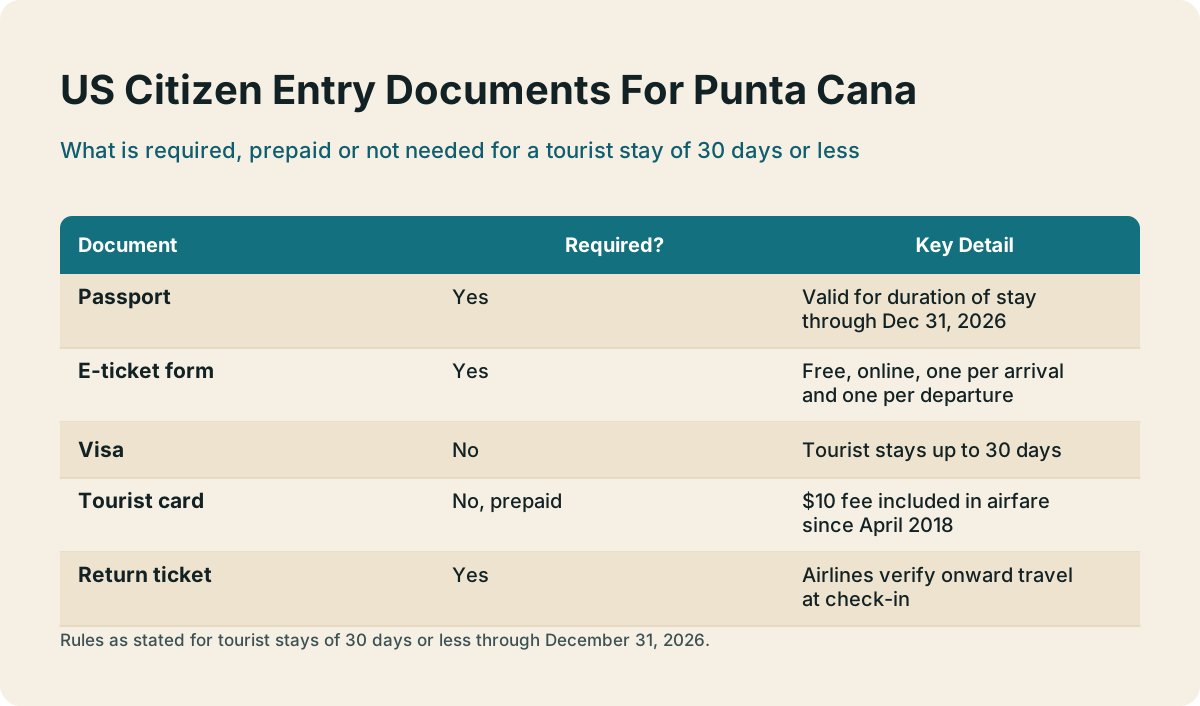
| Document | Required For US Citizens | Notes |
|---|---|---|
| Passport | Yes | Valid for duration of stay through Dec 31, 2026; undamaged, blank pages |
| E-ticket form | Yes | Free, online, one per arrival and one per departure |
| Visa | No | Tourist stays up to 30 days |
| Tourist card | No, prepaid | $10 fee included in airfare since April 2018 |
| Return ticket | Yes | Airlines verify onward travel at check-in |
If you are not a US citizen, the picture varies by nationality: some passports get a similar visa-free window, while others need a visa arranged in advance. Verify your own country's terms with the Dominican authorities before booking flights rather than assuming the US rules apply to you.
How Does The Dominican Republic E-Ticket Work?
The e-ticket is a free digital form that replaced the old paper immigration, customs, and health declarations. Every passenger, including US citizens and children, must complete it online before arrival and again before departure. The form generates a QR code that immigration officers scan at the airport; one submission can cover a family or group of up to seven people traveling together.
The form lives at the official portal, eticket.migracion.gob.do, and there is no charge, ever. If any third-party site asks for a fee to "process" your e-ticket, that is a service reselling something free. Completing it takes about ten minutes: passport details, flight numbers, your Punta Cana accommodation address, and a short customs and health declaration. The portal generates a QR code you can print or screenshot.
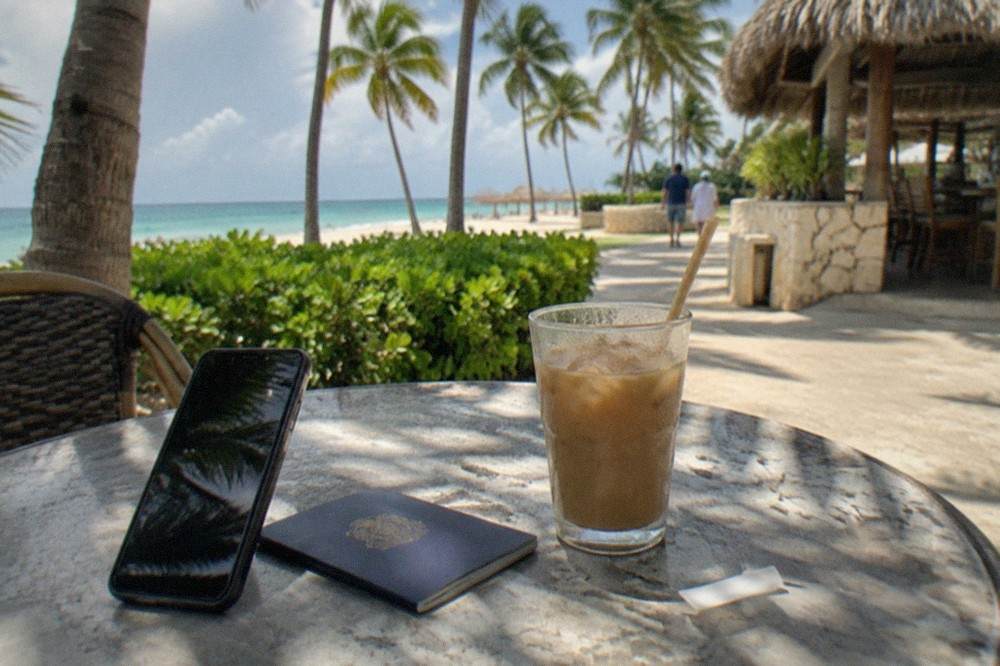
Two practical habits save the most time. First, complete the form a day or two before departure rather than at the gate, when the airport wifi is slow and the boarding queue is moving. Second, do not skip the departure leg: the system requires a separate e-ticket for your exit flight, and Punta Cana's departure hall does have queues for travelers who never filed it. Some airlines email reminders, but many do not, so set your own.
The family grouping feature is genuinely useful. One adult can enter details for up to seven people traveling together, which matters for families with small children: kids are not exempt from the requirement even when they are lap infants for ticketing purposes. A group of eight or more needs a second submission under a second adult's name. The official Migración information page answers edge cases, including what to do if your flight changes after you file.
| Common E-Ticket Mistake | What It Causes | How To Avoid It |
|---|---|---|
| Typo in the passport number | Officer cannot match the form to the document | Re-check each digit against the photo page before submitting |
| Blank accommodation address | Form stalls or prompts follow-up questions at the counter | Enter the hotel name even if the booking is not final |
| Filing only the arrival form | Extra queue and delay at departure check-in | File the second e-ticket once the return flight is confirmed |
| Paying a third-party site | The same free form, plus a service fee | Use the official portal directly |
The mistakes above are predictable and avoidable, and they account for nearly every e-ticket holdup at Punta Cana's counters. File both forms, screenshot both QR codes, and the paperwork side of your trip is done.
Do You Need A Visa Or Tourist Card For Punta Cana?
US citizens need no visa for a Dominican Republic tourist stay, and the old $10 paper tourist card has not been issued at airports since April 2018, when its cost was folded into international airfare. What remains is a 30-day visa-free stay granted automatically on arrival, with extensions handled through the immigration authority if a trip runs longer.
The tourist card question still generates confusion because older guidebooks, and a surprising number of resort forums, describe a card purchased at a kiosk for ten dollars. That kiosk is gone for air arrivals. The fee still exists on the books, but airlines collect it inside the ticket price, as the Dominican tax authority explains on its tourist card page. You will not be asked for ten dollars anywhere in Punta Cana airport.
Cruise passengers and land border crossers have different rules: the prepaid card applies to air arrivals, so overland entries or ferry and cruise arrivals can involve separate fee collection. For the overwhelming majority of Punta Cana visitors, who arrive by plane, there is nothing to pay and nothing to collect. The visa question is equally simple for US passports, which get the full 30-day tourist stay stamped automatically.
The 30-day limit deserves one paragraph of caution. Immigration officers stamp an entry date, and overstays are fined on a rising scale when you exit, paid at the airport. A two-week vacation has enormous margin. A five-week stay does not, and the fix is a straightforward extension filed with the immigration authority before day 30, not a negotiation at the departure counter. If there is any chance your trip stretches past a month, extend early; the process is administrative, not punitive, when handled on time.
How Long Can US Tourists Stay In The Dominican Republic?
US tourists may stay up to 30 days without a visa, counted from the entry stamp, with extensions available through the Dominican immigration authority before the deadline. The stamp is granted automatically at passport control, and an overstay triggers a fine paid at departure on a scale that rises with the length of the overstay.
Thirty days is far more than most Punta Cana trips need. The typical visitor flies in for four to ten days, fills the stay with two or three excursions, and leaves well inside the window. The limit starts to matter for remote workers, snowbirds splitting a winter between Punta Cana and elsewhere, and travelers combining the Dominican Republic with a second Caribbean stop on one ticket.
| Trip Length | What The 30-Day Rule Means For You |
|---|---|
| A week or less | The standard Punta Cana vacation; the stamp covers it many times over |
| Two to three weeks | Still comfortable; keep the stamped entry date noted somewhere handy |
| Right up to the limit | File an extension before day 30 if plans might slip even a few days |
| Longer than a month | Extend in advance, or expect a fine on a rising scale at departure |
Extensions are handled by the immigration authority and they are routine. What they are not is retroactive. An overstay of a few days incurs a modest fine; a months-long overstay can mean a larger payment and a flag that complicates your next entry. The clean pattern: decide before day 30, extend if needed, keep the stamped entry record somewhere photographable.
For context on what a longer stay actually buys you: the Santo Domingo Or Punta Cana comparison is relevant if a 30-day window tempts you to split time between the resort coast and the capital, which is a two-to-three-hour drive each way on the toll highway.
What Is The Dominican Republic Departure Tax?
The departure tax rose from $20 to $30 per passenger under a 2026 tax law, but almost no traveler pays it at the airport because airlines collect it inside the ticket price. The only passengers who might see it separately are those on unusual or charter fares, and even then it is charged by the carrier, not at a counter in the terminal.
The increase arrived in mid-2026 as part of a broader tax package the legislature passed. For the traveler, the practical effect is close to zero: your Punta Cana round trip already includes the exit tax in the fare you paid when you booked. You only need to know about it so you can wave off anyone, a taxi driver, a forum post, an overly helpful hotel desk, suggesting you set aside cash for an airport departure fee.

What you will spend money on at the airport is the ordinary stuff. The departure hall has restaurants and shops priced like any tourist airport, and the duty-free section takes both pesos and dollars. The exit immigration scan wants your second e-ticket QR code, which is the one entry formality that genuinely repeats. Have it on your phone's lock screen or printed with your boarding pass, and the exit is faster than the arrival.
A useful pattern for the money side of the whole trip: figure your airport-side fee costs at zero, budget separately for transport and tips, and put your real spending decision where it belongs, into which excursions are worth booking. The buggy cost breakdown for Punta Cana gives a sense of how little the land-based adventures cost against the flight that brought you there.
What Happens At Punta Cana Airport Customs And Immigration?
Arrival at Punta Cana follows a predictable sequence: passport control with your e-ticket QR code, baggage claim with biosecurity screening, then a customs scan of your bags. Declare large sums of cash and agricultural items honestly, because the screening at the belts is real, and the allowances themselves match standard international norms rather than any special Dominican regime.
The customs questions on the e-ticket cover a standard list: large amounts of currency, food, plants, and animal products. Declare honestly. The Dominican Republic is an agricultural economy, and biosecurity screening at the airports is real, with dogs working the baggage belts. Travelers bringing packaged snacks for kids are fine; travelers bringing fresh fruit from a connecting-flight country are the ones who lose it.
Immigration itself is quick when the e-ticket was filed correctly. The officer scans the QR code, stamps the passport, and the entry stay clock starts. Officers occasionally still hand arriving tourists a slip left over from the old card system; take it if offered and keep it with your passport, but do not panic if you never receive one. The e-ticket has replaced it, and losing the slip causes no exit problem in the current setup.
| Arrival Step | What Happens | What You Need Ready |
|---|---|---|
| Passport control | Officer scans the form and stamps the passport | Passport, e-ticket QR code |
| Baggage claim | Belts plus biosecurity dog screening | Your bag claim tag only |
| Customs scan | X-ray of bags, questions if flagged | Honest declarations for food and currency |
| Exit hall | Transport desks, taxi ranks, resort shuttles | Your hotel name for the driver |
Departure is the mirror image, with the second e-ticket scan before the gates. Give yourself the usual international margin on peak travel days, and know that Punta Cana's terminal is small enough that the whole sequence from curb to gate is short when queues are normal. The real waits are at check-in and in the duty-free stretch, not at immigration. Arrive relaxed, phones charged, both QR codes findable in two seconds, and the airport becomes the easiest part of the day.
When Should You Book Excursions Relative To Your Trip Paperwork?
Book excursions after your flights are confirmed and your e-ticket is filed, which for most travelers means sometime in the weeks before departure, and prioritize listings with free cancellation, typically up to 24 hours before the start, so a flight change never strands a prepaid trip. The busiest full-day options carry thousands of reviews and steady demand, so they deserve earlier booking than niche picks.
There is a natural order to trip logistics, and it genuinely matters. Passport first, flights second, e-ticket third, excursions fourth. Excursion bookings made before the flight exists are the ones that generate cancellation fees, missed pickup windows, and refund disputes. Once the flights are ticketed, though, waiting until you land to book is the more expensive mistake: resort desks add commissions, popular days fill up, and the best-reviewed tours go first.
The demand pattern is consistent year to year. Full-day island trips and the large-capacity combos fill first, especially around the winter holidays and the clean-water stretch from November through March. Small-group boat tours and half-day adventures hold more last-minute availability but still tighten around peak weeks. Nightlife and shows stay date-flexible longest. The How To Book Punta Cana Excursions guide covers the mechanics of reserving and paying, and the Best Time To Book Punta Cana Excursions breakdown covers the calendar side in detail.
One entry-related angle most lists miss: your e-ticket asks for your accommodation address, and excursion pickups are organized by hotel zone. Book your tours with the same hotel name that appears on your e-ticket and your flight reservation, and every pickup, the Saona bus, the buggy truck, the Santo Domingo coach, arrives at the right lobby without a morning phone call. Mismatched addresses are among the most common causes of missed excursion pickups, and they are entirely avoidable with one consistent detail across every document.
For travelers who want one anchor excursion locked in before departure, the Saona Island full day with buffet lunch is the one most first-time visitors start with: a nine-to-ten-hour day by catamaran and speedboat, rated 4.4 across 4699 reviews, from $82, with the full Saona catamaran tour page covering exactly what the day includes.
If a full day at sea sounds like too much commitment for one booking, the half-day combo is the other proven starter: zipline, dune buggy, and horseback riding bundled into roughly six hours, rated 5.0 across 5393 reviews and from $100. It leaves your morning or evening free, pairs with any flight schedule, and samples three activities in a single pickup.
How Do Entry Rules Connect To The Rest Of Your Punta Cana Trip?
Entry requirements barely touch the fun parts of a Punta Cana trip once handled, but they shape it in three ways: the 30-day window sets your maximum stay, the e-ticket's accommodation field fixes your pickup logistics, and the passport validity rule means even a soon-to-expire document can carry a complete vacation. Everything after passport control is normal vacation territory.
The day trips worth building around are straightforward to match to your energy level. Water days center on Saona Island, reached by catamaran or speedboat. Land days mean buggies, ATVs, horses, or a zipline combo. City days head to Santo Domingo's colonial zone for the cathedral and the oldest European street in the Americas. A full-day Santo Domingo city tour from Punta Cana, rated 5.0 across 5301 reviews and from $95, is the culture anchor, and it pairs well with a second, lighter day on the water.
There is one safety footnote that belongs on a planning page. The US State Department rates the Dominican Republic at Level 2, exercise increased caution, with the caution aimed mainly at urban neighborhoods in Santo Domingo rather than resort zones, where dedicated tourist police patrol the main areas. The practical takeaway for a Punta Cana visitor is simple: the resort corridor and organized excursions are the low-friction way to see the country, and a guided tour of the capital is a better plan than a self-drive.
Plan around the sargassum calendar too, since it affects which beaches look best when you arrive. The sargassum season guide for Punta Cana explains the seasonal pattern: November through March is the cleanest window, and boat excursions reach clear offshore water regardless of what the shoreline is doing.
Once the paperwork is done, the vacation planning is the enjoyable part, and Tours in Punta Cana exists to make that step fast: pick one anchor day trip, one half-day adventure, and one evening out, and the week fills itself. Your passport, your e-ticket, and your first excursion are the only three items that truly need to exist before the boarding call.
Common Questions About Dominican Republic Entry Requirements
Do US Citizens Need A Visa For The Dominican Republic?
No. US citizens enter visa-free for tourist stays of up to 30 days, with extensions available through the immigration authority. You need a valid passport and a completed e-ticket form, nothing more.
What Is The E-Ticket For The Dominican Republic?
It is the free digital form that replaced the old paper immigration, customs, and health declarations. Every arriving and departing passenger completes it online at the official portal and receives a QR code that officers scan at the airport.
How Long Does My Passport Need To Be Valid For Punta Cana?
Through December 31, 2026, US tourist visitors only need the passport valid for the duration of their stay, not six months. The document must be undamaged with blank pages. Recheck the rule if your trip falls after that date.
Do I Have To Pay A $10 Tourist Card At The Airport?
No. The tourist card fee has been included in airline ticket prices for air arrivals since April 2018. There is no card to buy and no fee to pay at Punta Cana airport.
Is There A Departure Tax To Pay When Leaving Punta Cana?
The departure tax exists, $30 per passenger after the 2026 increase, but airlines collect it inside your fare. Almost no traveler pays anything at the airport beyond normal shopping.
Can Children Be Included On One E-Ticket Form?
Yes. One submission can cover a family or group of up to seven people traveling together, including children. Groups larger than seven need an additional submission under another adult.