What To Stay Away From In Punta Cana?
An honest rundown of the tour touts, fake e-ticket sites, timeshare pitches and risky shortcuts to avoid in Punta Cana, plus how to spot a reputable, reviewed operator instead.
What To Stay Away From In Punta Cana?
Punta Cana earns its relaxed reputation, but the things genuinely worth avoiding here are transactional rather than violent: unlicensed beach vendors reselling tours, timeshare representatives posing as hotel staff, fake e-ticket websites charging for a free government form, and unregulated taxis outside the airport. The resort corridors themselves sit under routine tourist police patrol, so the risk that reaches most visitors arrives holding a laminated flyer.
That distinction matters for how you plan. Violent crime against tourists in the Punta Cana, Bavaro and Cap Cana hotel zones is rare, and the US State Department's travel guidance for the Dominican Republic sits at Level 2, exercise increased caution, with its warnings weighted toward urban areas such as parts of Santo Domingo rather than the east coast resorts. What actually separates a good Punta Cana week from a frustrating one is usually a booking decision: who you hand money to, on what evidence, and how easily you can undo it.
The honest framing is this. Almost every complaint pattern in visitor feedback traces back to tours bought from someone with no accountable listing: no reviews, no cancellation policy, no pickup logistics that survive a question. This site, Tours in Punta Cana, exists largely for that reason, because the difference between the same excursion at the same beach is rarely the beach. It is the operator.
A few current facts worth knowing before you spend anything:
The rest of this guide walks through the specific touts, scams, areas and purchases to decline, and then the positive version: what a reputable operator looks like, with real ratings and review counts from the tours listed here.
Which Tour Sellers And Street Touts Should You Avoid?
Avoid anyone selling excursions on the sand, at flea markets, through cold calls to your resort room, or from a desk that appears in your hotel lobby but is not actually run by the hotel. Legitimate Punta Cana operators sell through reviewed listings with published ratings and cancellation terms, not through touts with laminated cards. A persuasive pitch is not a booking system; a review history is.
The beach tout is the most persistent version. He walks the shoreline with a binder of Saona Island, snorkeling and buggy photos, quotes a price that sounds lower than your resort desk, and asks for cash or a card imprint on the spot. What you are usually buying is a seat on a bus run by a third party nobody has vetted, sometimes with a pickup that never arrives, sometimes with an itinerary that quietly drops the meal or the open bar that justified the price. There is no cancellation mechanism, because there is no listing.
The timeshare representative is subtler. Dressed like hotel entertainment staff, holding a "welcome breakfast" or "free gift" clipboard, they route you into a vacation-club presentation that consumes half a day and applies real pressure. A useful rule: anyone who needs to give you something free before telling you what they are selling is not giving you anything. Hotel staff will never cold-call your room to sell an excursion; if the caller claims to be from the front desk, hang up and walk down in person.
Resort excursion desks sit in between. Many are legitimate, and some are excellent, but they are concession businesses that add a markup, and research on park pricing in the region has documented resort-desk markups in the $20 to $40 range on tickets available cheaper through official channels. Ask any desk two questions: what is the cancellation window, and where can you read the reviews? A desk that flinches at either question has told you something.
If you want a walkthrough of the booking mechanics rather than just the warning, the companion guide on how to book Punta Cana excursions covers pickup windows, cancellation policies and payment timing in detail.
What Are The Most Common Scams In Punta Cana?
The scams that recur in Punta Cana are the fake e-ticket charge, the timeshare prize presentation, lobster-upgrade bait on cheap boat tours, and resold nightclub or show tickets bought from a person rather than a listing. None of these are violent; every one of them depends on a visitor who has not checked a price, an official portal or a review count before handing over a card.
The fake e-ticket is the newest and the easiest to defeat. The Dominican Republic requires every arriving and departing passenger to complete a digital e-ticket form, which combines the old immigration, customs and health declarations into one. It is free, it takes minutes, and it lives at the official migration portal. A cluster of lookalike sites charges $20 to $60 to "file it for you," and some travelers only discover the problem when the QR code fails or never arrives. Type the government address yourself, or complete the form through the link in our entry requirements guide.
The lobster bait works on the water. A tout quotes a cut-rate Saona or catamaran trip, you board, and the "fresh lobster lunch" advertised turns out to be an extra $25 to $40 in cash once you are at sea, with the standard buffet as the alternative. The tours on a reviewed listing state lunch terms in print before you pay. The same logic applies to photo packages, which are legitimately sold on many excursions but become a pressure tactic on unlisted ones.
| Scam | How It Works | The Countermove |
|---|---|---|
| Fake e-ticket site | Lookalike portal charges a fee for the free government form | File only at the official migration portal yourself |
| Timeshare prize | Free gift or breakfast routes you into a half-day sales pitch | Decline any gift attached to a presentation |
| Lobster upgrade bait | Cheap boat tour sells the advertised seafood on board, cash only | Book tours that print meal terms before departure |
| Resold show ticket | Street seller offers Coco Bongo entry at a discount, tier is not what you receive | Buy from the venue or a reviewed listing with a stated tier |
| Unlicensed taxi | Unmarked car quotes a low fare, then renegotiates mid-route | Use the airport's official taxi counter or your hotel's desk |
None of this requires paranoia. It requires one habit: before money moves, you should be able to see a price, an inclusion list and a cancellation policy in writing, and ideally several hundred strangers' worth of opinion about whether the promise was kept. That habit closes nearly every entry in the table above.
Which Areas And Situations Call For Extra Caution?
The situations that deserve caution in Punta Cana are unlit roads at night, unguarded beach stretches after dark, unmarked public buses, and driving yourself on highways you do not know. The country's official advisory level is exercise increased caution, with risk concentrated in urban neighborhoods far from the resort corridor, and the practical hazards visitors actually meet are traffic and water, not crime.
Roads are the honest first item. Dominican highways are generally well built, and the toll road between Punta Cana and Santo Domingo is a modern four-lane expressway, but the national crash rate is high by regional standards, and the local pattern mixes motorcycles, trucks and informal bus stops. A recent news report from the Macao area described a buggy on a guided excursion being struck by a car whose driver fled, injuring two riders. That is one incident, not a pattern, and guided buggy runs remain one of the area's most-booked activities. But it underlines the rule that matters on any excursion: helmet on, briefing heard, follow the guide's line, and stay off public roads at night in anything you would not drive at home.
Water is the second. Saona, Macao and the reef sites are supervised on tours, but unguarded beach stretches at night, and swimming alone anywhere, are the two behaviors that show up again and again in avoidable incidents. Seasonally, sargassum seaweed shapes which beaches are pleasant rather than risky: it peaks May through August and recedes from September, and the sheltered southwest-facing landing spots such as Saona's beaches see far less of it than east-facing Bavaro. For anyone weighing this against a winter trip, the sargassum timing guide has the month-by-month detail.
Public transport is fine in the daytime and confusing at night. The formal intercity buses are comfortable and cheap, while the informal minibuses and guaguas run unmarked routes where a visitor is an obvious mark for an inflated fare. The old city of Santo Domingo, if your trip includes it, has a dedicated tourist police presence in the Colonial Zone through the evening; the neighborhoods worth avoiding are the ones no itinerary reaches anyway.
How Do You Spot A Reputable Punta Cana Tour Operator?
A reputable operator has three things a tout cannot fake: a rating with a visible review count, a written cancellation policy, and a pickup arrangement tied to your actual hotel. Print the price, print the inclusions, and let a stranger's review confirm the promise held. On this site's roster, reviewed tours carry their counts openly, like the 5.0 rating across 5,393 reviews held by the combined zipline, dune buggy and horseback excursion.
Review counts matter more than ratings at the decimal level. A 5.0 from six reviews is six people's good afternoon; a 4.4 across 4,699 reviews, which is what the standard Saona catamaran with buffet lunch carries, is a tested product with a known distribution of good days and bad ones. When you compare, print the count beside the rating, because that pairing is the single fastest screen between a real operation and a storefront.
| Reviewed Tour | Rating | Reviews | Starting Price |
|---|---|---|---|
| Half-day zipline, dune buggy and horseback ride | 5.0 | 5,393 | From $100 |
| Saona Island catamaran with buffet lunch | 4.4 | 4,699 | From $82 |
| Adults-only coral reef snorkeling catamaran | 4.9 | 1,805 | From $114 |
| Small-group Saona Island full day tour | 5.0 | 1,544 | From $165 |
Cancellation terms are the second screen. Free cancellation up to 24 hours before departure is the common standard on reviewed Punta Cana listings, and anything that wants cash on a beach with no undo option is offering you a worse deal than it appears. Pickup logistics are the third: a real listing names the pickup window and the hotel areas it covers, and Cap Cana or Uvero Alto addresses sometimes carry a supplement, which is a normal cost of geography rather than a scam, provided it is disclosed in advance.
None of this says big is better. The small-group Saona tour in the table above costs roughly double the standard catamaran day, from $165 against from $82, and its 5.0 rating across 1,544 reviews reflects a deliberately smaller boat and crowd. The adults-only reef snorkeling catamaran at 4.9 across 1,805 reviews sells quiet rather than volume. Choosing between them is taste; verifying any of them is method. If your trip lands in peak season and you are deciding when to commit, the best time to book Punta Cana excursions guide tracks the pricing windows.
What Should You Avoid Buying At Your Resort Or On The Beach?
Skip the marked-up excursion menu at an unvetted resort desk, the beach vendor's coconut-and-cigar bundles, and any nightclub or show ticket bought from a person rather than a listing or the venue itself. Resort desks can add a markup to tours available at base price elsewhere, and resold nightclub tickets are the classic route to a wrong seat tier or a pickup that never happens.
Coco Bongo is the clearest worked example, because it is Punta Cana's most resold night out. The venue is a theatrical nightclub with acrobats, tribute shows and confetti, running Tuesday through Sunday with doors around 8 p.m. and main acts late. Its tiers are genuinely different products: general entry with a domestic open bar, a premium open-bar tier, and a Gold Member tier adding skip-the-line entry, reserved seating and premium drinks, at prices that climb with the weekend. When a street seller offers "Gold Member" at a discount, the risk is not robbery; it is discovering at the door that your ticket is a different tier than you paid for, or that the promised transport was never arranged. The venue's own site states the tiers, and it urges advance booking because weekends sell out, which is the honest version of the same urgency a tout fakes.
Beach goods are the smaller tax. Coconuts, cigars, rum and larimar jewelry from a walking vendor carry no receipt, no provenance and a negotiating culture that starts high. There is nothing wrong with a market, and haggling politely is part of it, but two items deserve a hard no: any cigar claimed to be genuine Cuban at a beach price, and any larimar that looks too blue and too cheap, since dyed imitations circulate. Buy such things in a shop with a receipt if you care, and from a cart if you do not.

The unifying rule is the one this whole guide keeps returning to: a price you can see in writing before you commit, and a seller who exists after the transaction. Even the nightlife guide on this site, Coco Bongo and Punta Cana nightlife tours, sticks to that principle, comparing ticket tiers the way you would compare any product rather than trusting a pitch.
What Should You Not Do On The Excursions Themselves?
Do not drive a buggy or ATV without a helmet, a valid license and a full safety briefing, do not swim alone or after dark at unguarded beaches, and do not hand your passport or original documents to anyone on an excursion. Helmets are mandatory on legitimate buggy runs, most operators require drivers to be at least 18 with a home-country license, and pregnancy and back conditions are standard exclusions for a reason.
The buggy category deserves its own paragraph because it is the excursion where participant behavior changes outcomes. Punta Cana's buggy routes pass through countryside tracks, a farm stop with coffee, cacao and mamajuana tastings, a cenote swim and Macao Beach, sharing some public trails with local traffic. The operators this site tracks are structured around that: the half-day ATV, water cave and Dominican culture tour runs about four hours at 4.7 across 3,408 reviews, and the buggy tour with cave swim and Macao Beach runs at 4.2 across 3,147 reviews, both including briefing, helmet and pickup. What feedback shows, across years of reviews, is that most incidents trace to riders ignoring the guide's line or underestimating dust, mud and other vehicles. If you are unsure what to wear, closed-toe shoes and clothes that can be ruined are the baseline, and the what to wear on a Punta Cana buggy tour guide covers the rest, including why a bandana matters on dusty trails.
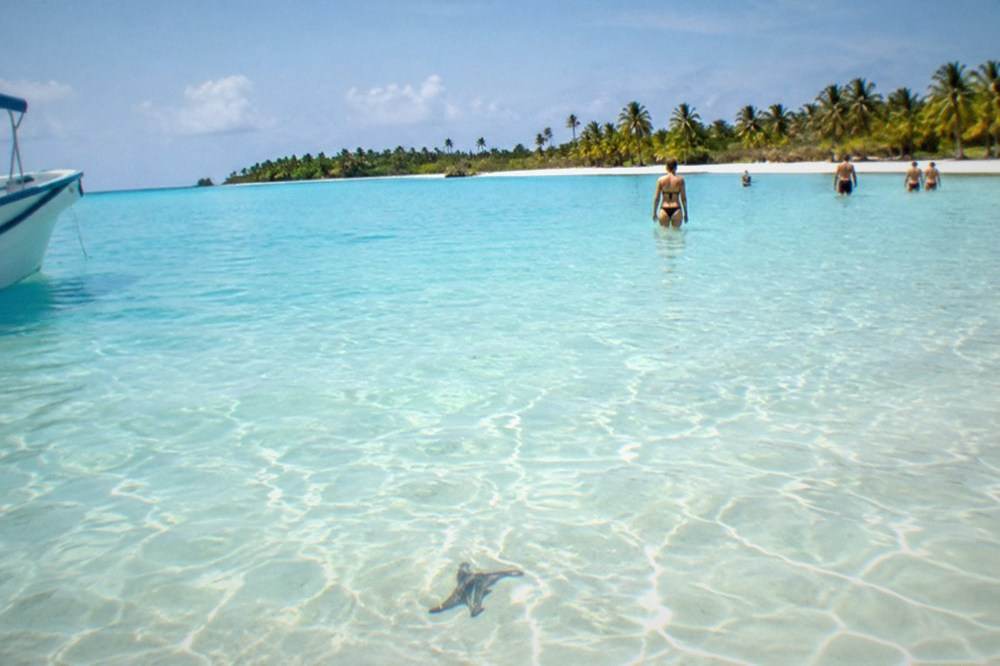
Water excursions have a shorter list. Stay with the group at the reef and the natural pool, because the stops are chosen for depth and conditions, and the starfish at the natural pool are protected: touching or lifting them for a photo is both harmful and, on any well-run tour, explicitly prohibited by the guide. Alcohol and swimming mix worse at sea than they do at a pool bar, and the open bar on a catamaran is not an exception to physics. On whale-watching trips to Samana, which run only January through March, follow the distance rules the crew states; the whales are the attraction precisely because the boat does not chase them.
Documents, finally, are a small rule with a large downside. Excursions need your booking reference and an ID, not your passport itself. A phone photo of the passport data page and a paper copy of your booking voucher cover almost every checkpoint on any tour sold through a reviewed listing, and they protect you from the one genuinely hard problem in Dominican travel logistics: replacing a document while abroad. The e-ticket QR code on your phone likewise covers airport exit; there is no reason a tour, a vendor or a driver ever needs the original.
Common Questions About What To Stay Away From In Punta Cana
What To Stay Away From In Punta Cana?
Stay away from unlicensed tour touts on the beach and at flea markets, timeshare pitches dressed as hotel offers, fake e-ticket websites charging for a free government form, unlicensed taxis, and any excursion sold with no review history or cancellation policy. The resort zones are heavily patrolled and generally safe; the losses visitors report are almost always financial, from booking with sellers who cannot be found again after payment.
Are Punta Cana Beach Vendors Dangerous?
No, beach vendors are rarely dangerous in any physical sense. They are persistent, they negotiate from inflated starting prices, and some resell tours that do not match what was promised. The risk is your wallet and your afternoon, not your safety, and a polite no followed by walking away ends nearly every encounter.
Is It Safe To Buy Tours From A Street Seller In Punta Cana?
It is not recommended. Street sellers have no cancellation mechanism, no visible review history, and often no control over the actual operator who runs the trip. A reviewed listing with a published rating and a written cancellation policy, such as a 4.4 rating across 4,699 reviews on the standard Saona catamaran day, gives you recourse a tout cannot offer.
What Is The E-Ticket Scam In The Dominican Republic?
Lookalike websites charge $20 to $60 to file the Dominican Republic's e-ticket entry and exit form, which is free and takes only minutes at the official migration portal. Some travelers discover the problem when a QR code never arrives. Complete the form yourself at the official government address and never pay a third party to do it.
Is Punta Cana Safe At Night?
The resort and nightclub corridors are generally safe at night, with tourist police presence in the main zones. The cautions are unlit roads, unguarded beach stretches after dark, and driving yourself. Coco Bongo and the main nightlife venues run organized transport back to hotels, which is the practical way to end a night out.
How Do I Avoid Fake Tour Operators In Punta Cana?
Book only where a rating with its review count is visible, cancellation terms are in writing, and pickup logistics are stated for your hotel area. Operators with large, long-running review pools, like the half-day zipline, dune buggy and horseback ride at 5.0 across 5,393 reviews from $100, have accountability a flyer never will.